Obituary
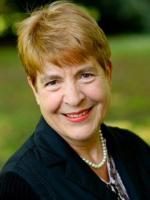
Prof. h.c. Dr.med. Walburg Maric-Oehler
- General Secretary of ICMART 2010-2014
- President of the German Medical Acupuncture Association DAEGfA 1991-2010
- Lecturer of Acupuncture Johannes Gutenberg-University Mainz
- Honorary Professor of Fujian University of TCM Fuzhou, China
by Sonja Maric and Mike Cummings
Walburg was born in Wurzen, daughter of a professor of German Literature at the University of Leipzig. Walburg was the eldest of three children and raised in a humanistic parental style. Her early years were influenced by the restrictions and narrow views of a communist regime, under which her father retrained as a master goldsmith to avoid the restrictions placed on academics. As the daughter of such, Walburg was singled out and compelled to do a perfect dive off a high diving board simply in order to graduate from her high school. Already as a child she dreamed of journeys to the Far East and her long-term first career aspiration was to become an Ambassador in China. She began her university education studying Chinese and Mongolian studies at the University of Leipzig (with the famous Professor Erkes), followed by medicine in Leipzig and at the Charité in East Berlin.
Driven by the desire to live and think freely, she was compelled to breakaway from the East German regime, and on the 10th of August 1961, at the age of 21, Walburg convinced and organised her entire family to escape to the West. The Berlin Wall was erected three days later.
In Frankfurt she continued her medical education, focusing on psychosomatics in the environment of early ‘anthropological psychiatry’ (Kuhlenkampf, Zutt), and she met and married a general surgeon. They went on to have three children. At the same time she established her own clinic in Bad Homburg, and from the start she practised integrative medicine, struggling against many prejudices and hostilities at that time.
As a young doctor, Walburg developed a keen interest in three areas: the culture and medicine of Asia; the use of unconventional therapies; and a desire for comprehensive and intellectually oriented psychosomatics within medicine.
Walburg’s early interest in Eastern philosophy led her to study acupuncture and subsequently Chinese medicine in various institutions in Asia and Europe. Her main early influence in acupuncture was the famous Wiener Schule under Professor Bischko, a pioneer of a Western style of medical acupuncture in Vienna. This resulted in a lifelong sincere friendship and collaboration with the ÖGA (Austrian Acupuncture Association). Many other partnerships with medical acupuncture associations were to follow, for example, in Eastern Europe even before the fall of the iron curtain. From 1986 she participated and joined activities of ICMART, which had been founded in 1983.
She continuously focused on transcultural and interdisciplinary exchange, for example by specialising in the ‘transcultural positive psychotherapy’ of Professor Peseschkian, whose oriental orientation she expanded with Asian aspects.
In 1991 Walburg became president of DAEGfA, the German Medical Acupuncture Association, and probably the largest Medical acupuncture association in the world. She led the organisation for nearly 20 years, influencing a whole era of growth and a new recognition of medical acupuncture, as well as the process of its official recognition in Germany. During this time DAEGfA membership rose to over 10 000.
For Walburg, each and every day was focused on a higher purpose. Early on she recognized and emphasized the importance of acupuncture as a medium of intercultural exchange. She was among the first to lead the difficult search for common scientific foundations of scientific medicine and traditional healing practices by initiating the interdisciplinary ‘Bad Homburg talks – New Old Medicine’ (1992-1996). Later she collaborated continuously with physicists e.g. on the topic of infrared-diagnosis and acupuncture.
While efforts to promulgate ‘Integrative Medicine’ have been common for the past 10 years, Walburg Maric-Oehler was in the forefront of this movement for 20 years, for example, when she opened the dialogue with universities on acupuncture: e.g. with 11 Symposia ‘Acupuncture and University – Acupuncture in Dialogue’ at Mainz University (1996-2008). She initiated this integration with a wide range of interdisciplinary, multi-national associations, international experts and with the involvement of Chinese universities and ICMART. She represented and strengthened the image of acupuncture in Germany and abroad and helped to firmly establish acupuncture in medicine and public healthcare. She was the principal force, inspiration and organiser of the highly successful 2001 ICMART Congress in Berlin, which welcomed over 1000 delegates.
She contributed her experience not only to the Asian medical traditions of China, Korea, Japan and Tibet but also new forms of acupuncture such as Yamamoto's New Scalp Acupuncture (YNSA). She accompanied him during his first years of teaching in Europe and systematised his methods, which led to its international adoption. She co-authored Yamamoto’s first German textbook.
Her early study travels to Asia led to life-long international cooperation and friendships, in among others, China, Korea and Japan. For example she enjoyed long-term collaboration and successful exchange with Fujian University for Traditional Chinese medicine (TCM) where in 1998 Walburg was appointed as Honorary Professor. Other academic positions included Lecturer of Acupuncture at Johannes Gutenberg University in Mainz.
On a journey to Ladakh in 1990, she developed a deeper interest into another Asian medical tradition through a meeting with a Tibetan doctor. This was the start of a fruitful collaboration between East and West that has persisted to this day. Walburg strongly influenced the growth in knowledge and interest in Tibetan medicine in Europe, notably by initiating and establishing the first educational program in Tibetan medicine for physicians.
As an energetic promoter of youth she enthusiastically and altruistically supported and advised many medical students in their careers. In Asia, several doctors gratefully call Walburg their ‘German Mum’.
In addition, she was tirelessly involved as a confident and charismatic ambassador for integrative medicine, CAM and acupuncture around the world, latterly in her role as General Secretary of ICMART (International Council of Medical Acupuncture and Related Techniques). Since the 1990s, in various roles as Vice President and President she was in the forefront of the dissemination of medical acupuncture as a new entity ‘western acupuncture’, especially in Europe and Asia.
For the last 10 years Walburg worked intensively on the official recognition of acupuncture, and especially medical acupuncture, in Brussels at the European Union (EU) in the framework of EU Public Health. She has been a founding member or held key positions from the very beginning in different EU CAM-initiatives e.g. ECPM (European Council for Pluralism in Medicine), CAMDOC Alliance (Alliance of European Medical CAM Associations), EUROCAM (European CAM Stakeholder Group), and has been member of advisory or management boards of EICCAM (European Information Centre of CAM) and Cambrella, 7th EU Research Project or GPM (Association for Plurality in Medicine).
As the principal contact for the European Initiative for Traditional Asian Medicine, EITAM, she extended her accomplishments beyond acupuncture and TCM to encompass all the great Asian medical systems, with a special focus on the recognition of Tibetan medicine in EU Public Health.
Among Walburg’s latest projects were the initiation of an interdisciplinary working group and the first symposium on ‘Comparative Asian Medicine.’ She strongly believed, practiced and personally strove for the development and implementation of an integrative psychotherapy by combining acupuncture, Eastern psychotherapeutic methods e.g. Chinese psychosomatics, Buddhist psychology with Western psychotherapy in daily medical practice.
She was tireless in her drive to implement a new paradigm of medicine by integrating the best traditional Asian practices into modern Western medicine. She was highly influential in unifying and maintaining all CAM disciplines at the EU level. Her influence was extended over Acupuncture and TCM as well as all Asian paradigms. She was a visionary and wise diplomat, gentle and inspiring, yet persuasive and convincing within the field of medical acupuncture. She was a dedicated and highly respected ambassador and pioneer for CAM.
Walburg died in December 2014 after a short illness surrounded by her close family. She leaves her husband and three children. She lived a full life dedicated to achieving her inner belief in compassion and respect for all. She was an inspiring figure as a mother, as a doctor in her relationship with patients, and as a forward-thinking, unifying colleague. She will be sadly missed by all who knew her.
Obituarty by S. Maric, M. Cummings